
Buried Utility Services Survey in Dorset
Enquire Today For A Free No Obligation Quote
At Buried Utility Services Survey in Dorset, we specialise in the process of locating, mapping, and identifying underground services and infrastructure using non-invasive detection methods.
These services may include electricity cables, gas mains, water pipes, telecoms ducts, drainage networks, and other utility assets that are not visible from the surface.
Since accidental strikes on underground utilities can cause serious safety incidents, project delays, and costly repairs, this type of survey is critical before excavation, construction, or groundworks begin.
As regulatory standards and planning requirements demand detailed underground service records, a Buried Utility Services Survey ensures compliance, improves safety, and reduces risk across all project phases.
Request a free quote for buried utility surveys in Dorset today.
What Is a Buried Utility Services Survey in Dorset?
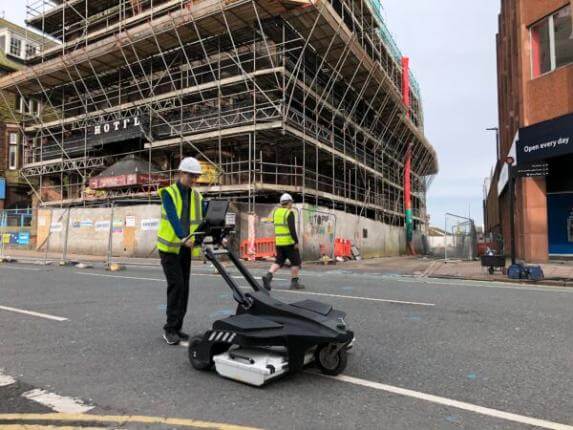
A buried utility services survey in Dorset is a specialist form of subsurface investigation that uses technologies such as electromagnetic location (EML) and ground penetrating radar (GPR) to detect and trace underground utilities.
The survey typically includes both active and passive scanning methods, a review of existing utility records, and the production of detailed drawings or CAD plans showing the location, depth, and type of buried services in Dorset.
Since not all utilities are made of metal or emit signals, the combination of multiple detection methods allows for the highest possible detection accuracy.
Why Is a Buried Utility Survey in Dorset Important?
A buried utility survey in Dorset is important because many underground assets are unrecorded, inaccurately mapped, or have been altered over time without updated documentation.
Since utility strikes are one of the most common causes of injury and disruption on UK construction sites, a professional survey helps ensure that excavation and drilling can proceed safely and legally.
As local authorities and asset owners increasingly demand compliance with PAS 128 standards, commissioning a detailed utility survey in Dorset has become standard practice for responsible developers and contractors.
What Does the Survey in Dorset Include?
A land topographic survey in Dorset includes the measurement and mapping of both natural and man-made features across a site.
It records ground levels, contours, and elevation changes to show the shape of the land.
The survey in Dorset includes boundaries, buildings, fences, walls, and roadways as well as trees, streams, and drainage systems.
It also includes visible utilities, access points, and other structures that may affect planning or construction.
The survey in Dorset provides accurate data that supports design, development, and legal requirements.
What Types of Utilities in Dorset Can Be Detected?
A utility survey in Dorset can detect a wide range of underground and above-ground services that are important for safe construction and planning.
Our buried utility services surveys in Dorset can detect water pipes, gas pipelines, and sewer systems that run beneath the surface.
It can also detect electrical cables, telecommunications lines, and fiber optic networks that supply power and communication.
In addition, a utility survey can detect drainage systems, fuel lines, and other buried infrastructure that may affect excavation, groundworks, or redevelopment.
By detecting these utilities, surveyors in Dorset provide accurate mapping that helps engineers, developers, and contractors avoid costly damage, reduce risks, and comply with regulations.
What Is PAS 128?
PAS 128 is the publicly available specification developed by the British Standards Institution (BSI) for utility detection, verification, and location in the UK.
It defines a tiered approach to survey quality, from desktop records (QL-D) to fully verified excavations (QL-A).
A PAS 128-compliant buried utility survey in Dorset helps demonstrate that reasonable steps have been taken to identify underground hazards, which supports health and safety duties under CDM 2015.
How Much Does a Buried Utility Services Survey Cost in the UK?
The cost of a buried utility survey in Dorset typically starts at £700 to £1,200 for small or single-plot sites.
For larger developments, road schemes, or phased projects, costs can range from £1,500 to £5,000+, depending on area size, complexity, access, and the level of reporting required.
What Are the Benefits of a Buried Utility Services Survey in Dorset?
A buried utility survey delivers vital clarity before any excavation, helping to reduce risk and support regulatory compliance.
The key benefits include:
- Prevents dangerous and costly strikes on buried services
- Reduces health and safety risks on construction sites
- Improves design accuracy for underground works
- Supports planning applications and permitting processes
- Provides confidence when working in congested or built-up areas
- Complies with PAS 128 and CDM 2015 requirements
- Avoids delays due to unforeseen utility conflicts
- Enables more efficient and coordinated site planning
As underground infrastructure becomes increasingly complex, a professional survey gives you the insight needed to plan and build safely.
How Long Does the Survey in Dorset Take?
Most buried utility services surveys in Dorset are completed within 1 to 3 days on site, depending on the size and complexity of the area being scanned.
The delivery of final reports and CAD drawings typically follows within 3 to 5 working days, although fast-track reporting is available for urgent projects.
Larger or phased developments in Dorset may require multiple visits and staged reporting.
Is a Buried Utility Survey in Dorset Always Required?
A buried utility survey is not always legally required, but it is strongly recommended in Dorset for any works that involve breaking ground, including site investigations, trial pits, piling, trenching, or construction foundations.
As many clients, councils, and insurers now expect surveys as part of due diligence, carrying one out helps demonstrate that appropriate safety precautions have been taken.
In high-risk areas such as hospitals, schools, and infrastructure corridors in Dorset, surveys are often a mandatory requirement before permits are issued.
What Is the Purpose of a Buried Utility Services Survey in Dorset?
A buried utility services survey in Dorset is carried out to identify and map underground infrastructure before any excavation, drilling, or construction work begins.
Since underground services are often inaccurately recorded—or not recorded at all—the survey helps prevent accidental strikes on live cables, water pipes, or gas mains.
As a result, this survey plays a critical role in ensuring site safety in Dorset, avoiding project delays, and complying with planning or health and safety obligations.
What Methods Are Used to Detect Buried Utilities in Dorset?
A buried utility survey in Dorset typically uses a combination of electromagnetic location (EML) and ground penetrating radar (GPR) to detect both conductive and non-conductive services.
Since not all utilities are metallic or live, relying on one method may miss critical features.
As GPR can detect plastic, clay, and fibre-optic ducts, it complements EML to provide a more complete underground picture.
Can You Detect Depth as Well as Location in Dorset?
Most buried utility surveys in Dorset include depth estimation, particularly when ground penetrating radar is used.
As radar signals reflect based on time and material properties, surveyors can calculate approximate depths of buried services and include these in CAD or PDF outputs.
Since depth accuracy depends on soil conditions and signal clarity in Dorset, results are subject to verification tolerances as outlined in PAS 128 standards.
Is a Buried Utility Survey the Same as a PAS 128 Survey?
A buried utility survey in Dorset may follow PAS 128 methodology, but not all surveys are PAS 128-compliant by default.
Since PAS 128 outlines specific procedures, quality levels, and data recording standards, it is often requested for larger developments or public sector work.
As the standard includes multiple quality levels, rom desktop assessments (QL-D) to post-excavation verification (QL-A)—the scope should be agreed in advance based on project risk.
How Accurate Is the Survey in Dorset?
The accuracy of a buried utility services survey in Dorset depends on the detection methods used, survey conditions, and the quality of available utility records.
As a general guide, surveys using EML and GPR can achieve positional accuracy within ±100 mm for well-detected services.
Since buried utilities may vary in depth, alignment, and construction in Dorset, all results are subject to interpretation tolerances, which are defined within PAS 128 reporting.
Will the Survey Show All Buried Services in Dorset?
A buried utility survey in Dorset aims to locate all known and unknown services within the surveyed area, but detection is subject to limitations.
Since some utilities may be shielded, decommissioned, or constructed from low-reflective materials, they may not appear in radar or EML scans.
As best practice, surveyors in Dorset use multiple techniques, validate findings with statutory records, and recommend trial holes where service avoidance is critical.
Do You Provide CAD Drawings and Reports?
The results of a buried utility survey in Dorset can be delivered in multiple formats, including CAD (DWG), GIS, and PDF reports.
Since many projects in Dorset require integration with design layouts or BIM models, accurate spatial outputs are essential for engineers, planners, and contractors.
Reports may include photographic evidence, equipment logs, methodology notes, and service depth data, depending on the level of detail requested.
How Long Does a Survey in Dorset Take?
The duration of a buried utility survey in Dorset depends on the site size, terrain, and complexity of services in the area.
As a general estimate, smaller sites may be completed in one day, while larger or congested areas may take several days.
Since analysis and drawing production follow the site visit, clients in Dorset should allow three to five working days for final outputs unless otherwise agreed.
Can You Survey Active Construction Sites in Dorset?
A buried utility services survey in Dorset can be carried out on active construction sites, provided it is safe to do so.
As surveyors use non-invasive methods that do not require excavation, they can work around ongoing operations, provided access is granted.
Where live services, heavy machinery, or surface obstructions are present, arrangements in Dorset may be made to phase the work accordingly.
Is This Survey Suitable for Residential and Commercial Projects in Dorset?
Buried utility surveys in Dorset are suitable for all types of sites, including domestic plots, commercial developments, highways, brownfield land, and large infrastructure schemes.
Since buried utilities can exist on almost any site—whether recorded or not—these surveys provide essential information for safe and informed design.
Whether you are planning an extension or a multi-unit scheme, a survey in Dorset ensures compliance and helps avoid costly surprises during groundworks.
Request a Free Quote for Buried Utility Surveys in Dorset
A buried utility services survey in Dorset provides essential information about what lies below the surface of your project site, helping to prevent damage, injury, and delay.
Since inaccurate or incomplete records can lead to significant health and financial risks, professional utility mapping supports safer and more efficient project delivery.
Whether you’re preparing for construction, redevelopment, or planning permission, our surveys offer the clarity and compliance your site requires.
Get a free quote from Buried Utility Services Survey in dorset today, and build with confidence below the surface.
Find More Info
Make sure you contact us today for a number of great buried utility services survey services in South West.
Here are some towns we cover near Dorset
Bournemouth, Christchurch, Poole, Ferndown, Wimborne MinsterFor more information on Buried Utility Services Survey in Dorset , fill in the contact form below to receive a free quote today.
★★★★★
Buried Utility Services Survey provided an incredibly thorough and accurate report for our redevelopment site in Bristol. Their team located several unrecorded services that would have caused serious issues during excavation. Communication was clear, the drawings were precise, and the job was completed exactly when promised — a genuinely professional service.
David Kershaw
Dorset
★★★★★
We commissioned Buried Utility Services Survey for a commercial extension project, and the quality of their work was excellent. The engineers were knowledgeable, polite, and worked efficiently around our busy schedule. Their detailed utility mapping gave us the confidence to proceed with groundworks safely and without delays.
Fiona Metcalfe
Dorset